

Commercial architecture – project, which works
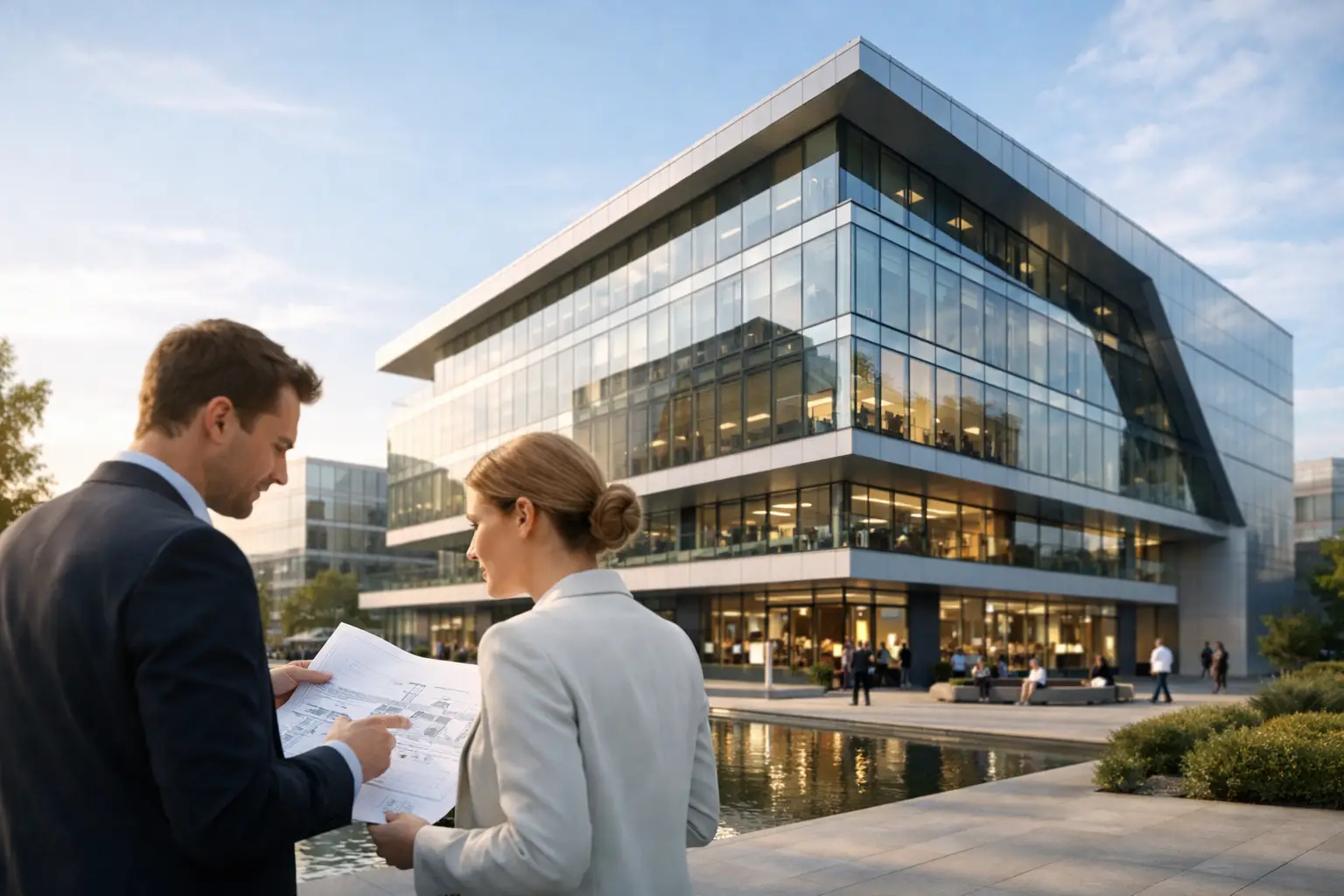
The first design decisions in a commercial facility are rarely just aesthetic. The entrance layout influences customer flow, storey height for lease flexibility, and backend zoning for operating costs over the years. That's why commercial architecture designs more than just space, but also the business result – and it is worth starting the conversation from this point.
A well-conducted commercial project must also respond to the needs of the brand, user and investment model. This is not a simple sum of square footage, facade and finishing standard. To proces, where every decision should support the value of the asset, comfort of use and feasibility of implementation.
Commercial architecture – design as a business tool
In the commercial sector, a building is not a neutral background. He works for his image, efficiency and revenue. This applies to offices, retail, hospitality, mixed-use facilities and service spaces. In each of these cases, the project should be assessed not only through the prism of form, but also because of this, how it supports the everyday operation of the investment.
What matters to the property owner is the durability of design decisions. Functionality and adaptability are important for the tenant. For the end user, the intuitiveness of the space is important, light quality, proportions, materials and that, does the place just work. When these three perspectives come together in one premise, architecture is starting to really build an advantage.
This is also a moment, in which you can see the difference between an effective design and an effective design. Effectiveness attracts attention. Effectiveness maintains value.
What determines the quality of a commercial project
The best commercial projects don't start with style. They start with questions. How should the facility make money?? Who will use it? How will needs change in three years?, five or ten years? Is the building supposed to strengthen the premium brand?, accelerate customer turnover, and can ensure long-term rental stability?
Only after establishing these foundations is it worth defining the architectural language. Form without strategy can be expensive. A strategy without spatial quality usually remains mediocre. The greatest value comes from combining both.
The proportions between representativeness and pragmatics are important. A lobby can build prestige, but if vertical communication is inefficient, the user experience quickly degrades in quality. A facade can give a building its identity, but if exposure is not taken into account, service and maintenance costs, starts to generate problems. In commercial architecture, beauty should be convincing, but also justified.
Commercial architecture designed from the inside
In many investments, the biggest mistake occurs then, when the shape precedes the logic of the interior. In practice, it is the interior and its operational structure that make the difference, whether the building will operate efficiently. This applies especially to commercial facilities, office and service, where every meter matters.
Designing from the inside means analyzing usage scenarios before the form is solidified. How main entry and deliveries take place? Where are the points of contact between the customer and the staff? What zones should be open, and which require privacy or access control? In a commercial facility, these questions are essential, not an addition.
This approach has it too financial dimension. Consistency between architectures, interior and operation limits the cost of subsequent corrections. It allows you to better predict the standard of finishing, the installations, execution logistics and pace of commercialization. For the investor, this means less friction between vision and implementation.
Where the project gains investment value
The value of a commercial project does not end with the permit or the opening day. A well-designed building provides greater leasing flexibility, it ages better and undergoes subsequent stages of adaptation more easily. This is especially important in markets, that respond quickly to changes in the work model, consumer behavior and tenant expectations.
Flexibility does not mean anonymity. Contrary – the most valuable objects have a distinct character, but at the same time they allow for various usage scenarios. This may mean a well-thought-out design grid, logical installation risers, good depth of the track or the possibility of grading the surface in stages. Sometimes less spectacular decisions protect the value of an asset the most.
Investors also increasingly look at the project as a risk mitigation tool. The sooner architectural perspectives are combined, interior design and development, the easier it is to avoid costly turnouts. This is where the integrated model has an advantage – such, in which the project is not separated from the realities of the budget, schedule and future operation.
From concept to implementation – where the advantage is created
In the early stages, most designs look good on the boards. The difference comes later, when you need to maintain quality through subsequent decisions. Will the concept survive cost optimization?? Are the material solutions adequate to the intensity of use?? Do architecture and interiors still speak one language after the entry of industries and contractors?
This is why a commercial project requires management discipline. It's not about stiffness, but about consistency. If the strategic assumption was clear from the beginning, it is easier to defend the right decisions and identify trade-offs faster, that really make sense.
Because compromises are inevitable. The question is, which ones are intelligent. Sometimes it is worth simplifying a facade detail, to maintain the quality of common spaces. Other times it is better to reduce the representative area, to improve the efficiency of rental floors. Good design is not about avoiding constraints, but on their conscious transformation into value.
Why one project partner changes the course of the investment
In commercial projects, the biggest losses rarely result from one bad decision. They are usually the result of process fragmentation. The architect thinks about form, experienced interior designer, contractor on feasibility, and the investor about profitability. Each of these perspectives is valid, but without a common core, tensions can easily arise, delays and costly corrections.
An integrated approach brings order to this system. When architecture, interiors and real estate development logic are carried out coherently, the project matures faster and responds better to the actual investment goals. It is not only a matter of communication convenience. It's a matter of decision quality.
For customers, who expect both a clear identity of the space, as well as commercial rationality, such a model becomes a natural choice. Working at the intersection of design and real estate, QCA looks at the project not as a separate service, but as part of a larger value strategy.
Commercial architecture design – what customers expect today
Today's commercial client expects more than just a proper building. He wants space, that communicates the level of the brand, supports operations and provides investment predictability. The visual effect itself is less and less enough. It's the whole thing that counts – from first impression to everyday performance.
In practice, this means a greater emphasis on consistency. Consistency between architecture and interior. Between aesthetics and maintenance. Between the ambition of the project and its ability to defend itself within the budget. This approach is more demanding, but also much more mature.
The importance of user experience is also growing. Office spaces are not only about workstations, but about the rhythm of the day, comfort and readability of the layout. In retail, intuitive movement is important, exposure and atmosphere. In mixed-use, the relationship between functions and the ability to build one play a special role, consistent address. Each object type has its own logic, but the common denominator remains the same – the architecture is supposed to work equally well, what does it look like?.
When a commercial project really pays off
The project then pays off, when its quality is felt not only in visualizations, but in the balance of use. When the space attracts the right tenants. When the finish does not age after two seasons. When the system allows you to change functions without expensive reconstruction. And when the brand present in the building is legible without being intrusive.
Not every object requires the same level of formal expression. Not everyone needs the same scale of interior investment. The right answer depends on your location, target group, investment horizon and operating model. Therefore, responsibly designed commercial architecture does not promise universal recipes. Instead, it builds solutions precisely tailored to the purpose.
This is where real quality begins – for that, where the project is not a cost to justify, but by decision, which organizes the entire investment and stays with it long after completion.