

Does an architect increase the value of real estate??
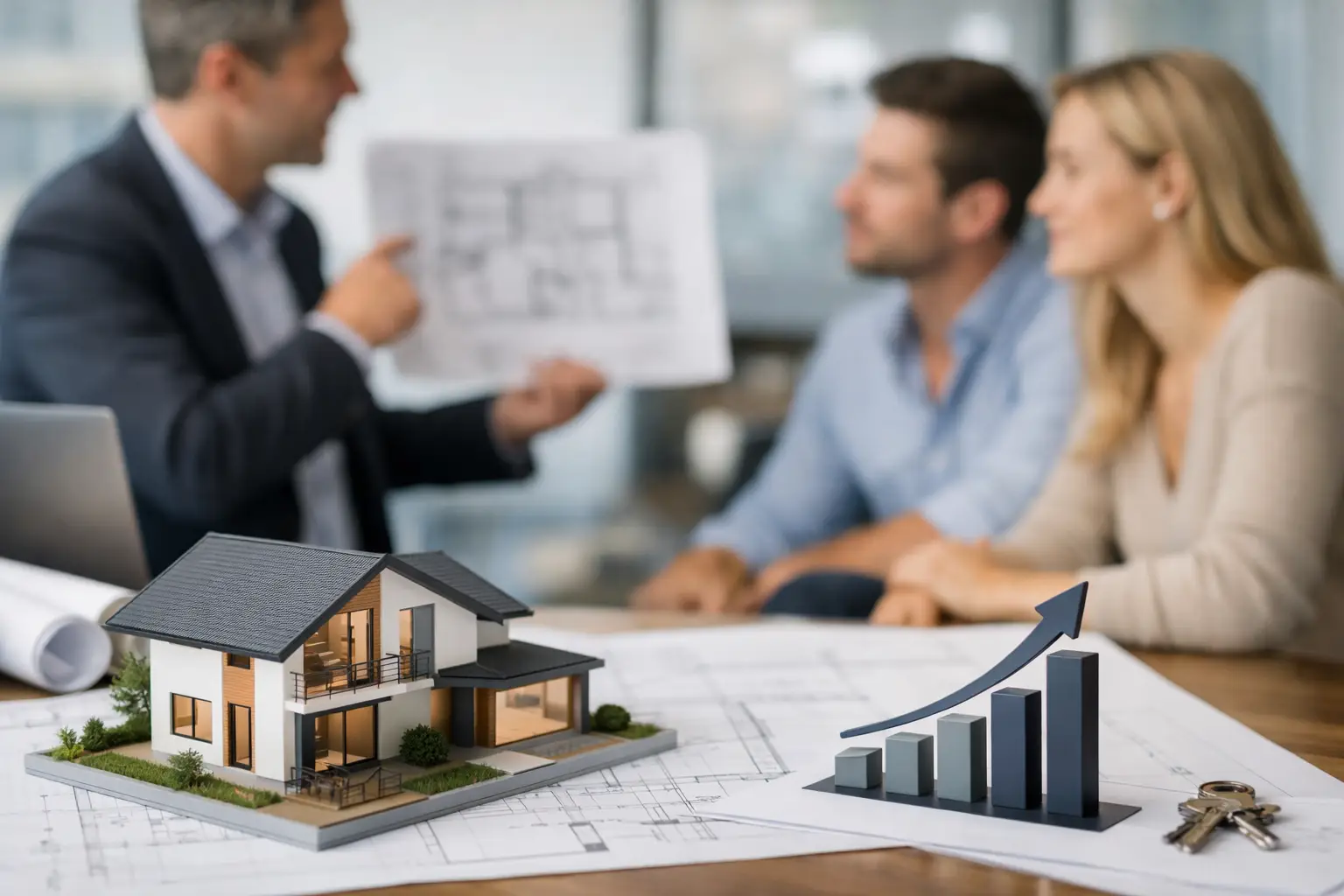
Buyers rarely pay more just for "nice design". They pay for a better deal, a more convincing shape, higher standard of everyday use and lower risk of costly mistakes. That's why the question, whether the architect increases the value of the property, it's not just about aesthetics. It concerns the real impact of the project on the price, sales pace, attractiveness of the lease and the long-term position of the asset on the market.
Does an architect increase the value of real estate in practice?
The short answer is: often yes, but not automatically. The mere presence of an architect in the project does not guarantee higher value. It matters, whether the project meets the needs of a specific market, budget and investment standard.
Well-managed architecture then increases value, when it improves the quality of space in a way that is noticeable for the user and measurable for the investor. This may mean better lighting in the interior, more logical functional layout, higher surface efficiency, a more attractive facade or consistency between architecture, interior and positioning of real estate.
From a market perspective, this is not the only thing that matters, what the building looks like in the visualizations. It counts too, how it works as a product. Does the apartment seem larger than its size?. Does the commercial premises offer flexibility in arrangement?. Does the building stand out from the competition without generating unjustified costs?. It is in these places that an architect can create real surplus value.
The value of real estate is not only the square footage
The price of real estate is influenced by location, standard of workmanship, environment and market situation. But within the same location and similar area, the differences can be significant. They are often determined by the quality of the project.
Two apartments with the same area may be perceived completely differently. One has a dark corridor, an unorganized living room and random division of zones. The second one offers a smooth layout, good proportions, natural light and space, which seems more refined from the first entry. The market values this difference very quickly.
An architect does not "add value" with style alone. It increases it through conscious design decisions, that enhance the perception of the property and improve its function. For the owner, this often means a higher offer price, a better rate of return for the investor, and for the developer, a stronger product in a competitive market.
What most often creates an increase in value
These elements usually have the greatest impact, that the user feels immediately. These include the proportions of the rooms, logical communication, the relationship between the living and private areas, the amount of daylight and the readability of the entire concept.
Consistency is also important. When the architecture of the building, common parts and interiors create one story, the property is perceived as more complete and more premium. In the investment segment, this often translates into better sales or higher rental rates.
Where the architect gives the greatest return
Not every project has the same potential. However, there are areas, where the architect's impact on value is particularly visible.
In apartments and private houses, the functional layout is crucial. Moving the walls, opening of the day zone, better use of storage or improving the relationship with the garden or terrace can significantly change the perception of the property without the need to increase the square footage.
In rental investments, quality repeatability and space optimization are important. The architect helps to design the premises like this, to be attractive to the tenant, and at the same time cost-effective. This is especially important for micro-apartments, premium premises and mixed-use projects, where every meter has to work.
In commercial real estate, value is created by the flexibility and identity of the place. Office, showroom or service premises must support the tenant's activities, but also to communicate a certain level of the brand. A well-designed space can improve commercialization and shorten the vacancy time.
Does a more expensive project always mean more value
NO. This is one of the most common mistakes when thinking about architecture. An expensive project does not have to be profitable, if it is scaled relative to the location, target group or sales potential of the property.
The best results are achieved with a tailored design. Sometimes it's worth investing in a strong one, expressive architecture, because the market rewards uniqueness. Other times it makes more sense to precisely organize functions and raise the standard in these areas, that buyers will actually notice. Value is created not then, when the design is most effective, but then, when it is most relevant.
Does the architect increase the value of the property before selling it?
Not, especially when the property has potential, which has not yet been mined. This applies to both older apartments and houses, as well as premises with a poor layout or buildings requiring repositioning.
An architect can see beyond the current state. He may suggest changing the function of the rooms, improving proportions, tidying up the entrance, opening views or a new interior logic. Decisions like this influence it, how quickly the property finds a buyer and how strongly it defends its price.
Risk perception is also important at the sales stage. Buyers are more willing to pay for space, which seems well thought out and ready to use. The less randomness there is in the design, the greater the sense of quality. This is especially important in the premium segment, where the price depends not only on the location, but also from the level of experience of space.
Architect and the cost of error
An increase in the value of real estate does not always mean an increase in price. Sometimes it's about avoiding losses. A poorly planned investment may cost more than the architect's fee – by a failed standard, ineffective surface, implementation problems or poor market attractiveness.
The architect limits this risk, because it organizes decisions in advance, before they become expensive. This is important both for the investor preparing a development project, as well as for the owner modernizing a single premises. The earlier design thinking comes into play, the greater the chance, that the budget will be used there, where it really creates value.
In practice, the best results are achieved by combining design sensitivity with an understanding of investment economics. This is why teams work so well, that also look at architecture, interior and profitability of the entire project. This approach is especially important for projects, which are not only supposed to look good, but also work effectively as an asset.
When the architect will not increase the value
There are situations, where the effect will be limited. If the property is in a very poor location, the market may not reward the high design costs. Likewise then, when the scope of changes is superficial and does not affect real functional problems.
It's also worth remembering, that not every investment requires spectacular intervention. Sometimes value is increased by a series of discreet decisions: layout correction, input improvement, better materials, more ordered light. Architecture doesn't always have to be loud. This is often the most valuable moment, when it works precisely and without excess.
A project that is disconnected from the target group can also pose a risk. An investment property designed solely to suit the owner's taste may lose its universality. In turn, a premium place that is too simplified in the name of savings may not achieve the expected price position. The architect then increases the value, when he understands more than just space, but also the recipient and the business context.
How to evaluate, Does cooperation with an architect make sense?
It's best to start with three questions. Firstly, whether the property has unused functional or image potential. Po drugie, whether the planned budget can actually translate into a higher price, faster sale or better lease. Thirdly, whether the project only requires an aesthetic refresh, or rather strategic redesign.
If the answer indicates the need to think more broadly than just renovation, the role of the architect becomes clear. A good design process organizes priorities, protects the budget and builds a consistent end result. For the owner, this means fewer random decisions. For the investor – greater predictability of the result.
In the integrated model, where design meets construction and development experience, this advantage is even greater. This is how studios like QCA work – combining architecture, interiors and investment perspective in one process. For the client, this means not only better shape, but also more conscious management of real estate value from concept to implementation.
The architect is not an added cost to the investment. In a well-managed project, it becomes a tool for building quality, market advantage and lasting value. If the property is to make a good first impression and perform equally well after many years, the project begins to matter more, than seen at first glance.