
Designing mixed-use spaces in practice
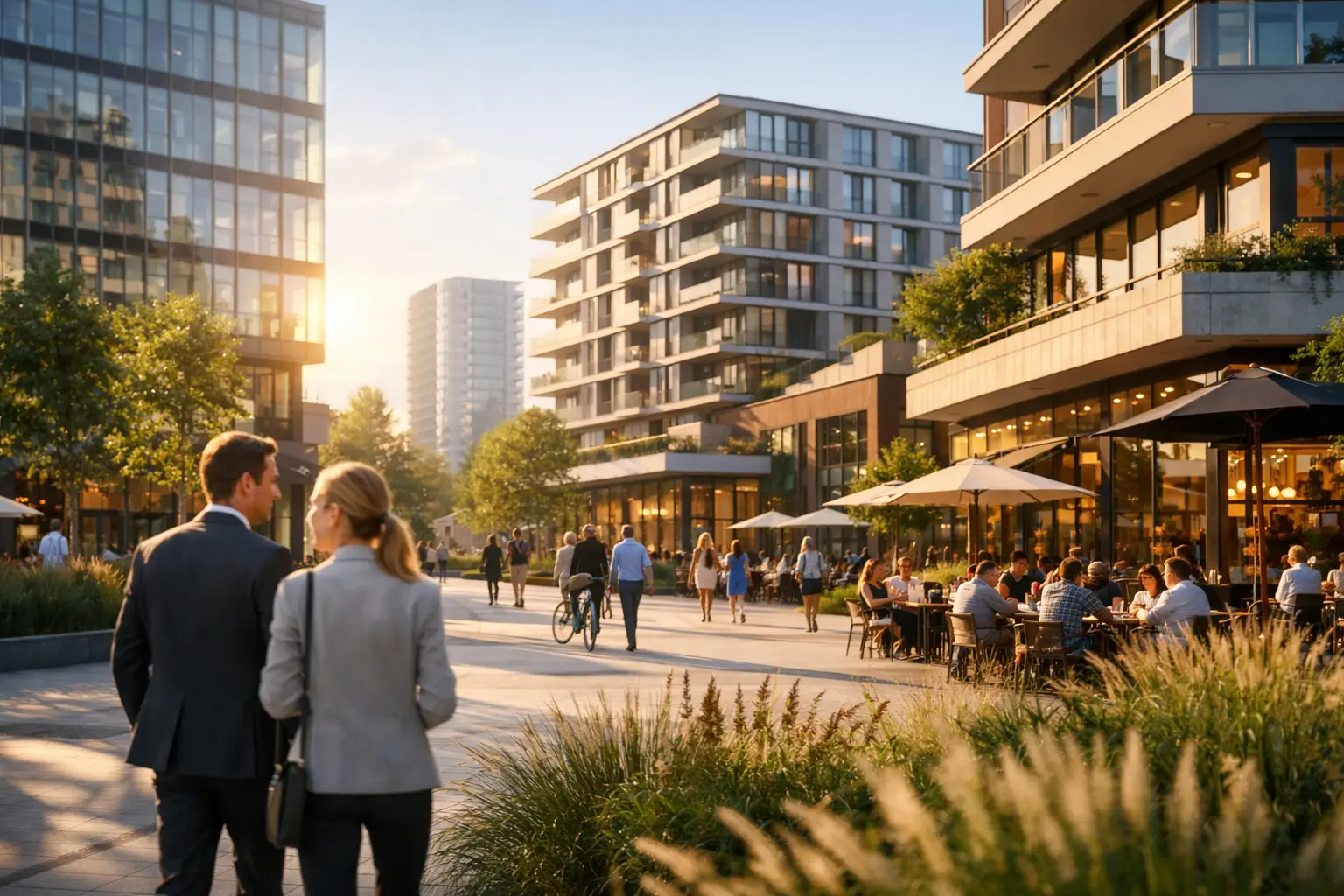
Project,de, in which the ground floor lives at a different rhythm than the upper floors, and one property must simultaneously respond to the needs of residents, tenants and investor, it doesn't forgive random decisions. This is why designing mixed-use spaces requires thinking broader than just the arrangement of functions. It's not just the form that counts here, but also the relationship between user experience, the operational logic of the building and the long-term value of the asset.
What really is mixed use space design?
In practice, it is not just about combining several functions in one object. A well-designed mixed-use space creates a coherent ecosystem, where the apartment, Work, handel, services and common areas support each other, instead of disturbing each other. It's the difference between a building with randomly assembled modules and a place, which has its own rhythm and clear identity.
For the owner or investor, such a structure may mean that the project is more resistant to market changes. For the user, it means convenience, legibility and natural flow of everyday activities. This is a task for a designer, where aesthetics must go hand in hand with planning precision.
Mixed use is therefore not an architectural style. This is a model of thinking about real estate – such, which integrates the function, operational and experience of the place.
Why mixed use projects are so demanding today
Expectations towards buildings and entire urban developments are growing. Users want convenience, quality and atmosphere. Tenants expect space, that supports their business model. Investors are looking at commercialization, maintenance costs, flexibility and potential for value growth. These interests are not always the same.
This is where the biggest challenge comes in. Designing mixed use spaces is not about maximizing the density of functions, but on their precise balancing. Too intense a service area may reduce the comfort of residential areas. A housing arrangement that is too tight may weaken the commercial potential of the ground floor. In turn, excessively impressive architecture without operational discipline often generates problems at the implementation and operation stages.
A well-run process starts with the right questions. Who will use the facility at different times of the day. What features should build traffic, and which ones need peace. Where is the line between accessibility and privacy?. And finally – which design decisions actually enhance the value of the investment, and which are just an expensive gesture.
Function is not enough – what matters is the relationship between functions
The most convincing mixed use projects are not based on a simple scheme: services downstairs, offices in the middle, apartments upstairs. This arrangement can be effective, but it is not always optimal. It all depends on the location, scale, traffic structures, target group and investment strategy.
Relationship design becomes crucial. The ground floor should activate the building and its surroundings, but without generating chaos. Communication must separate user streams, and at the same time remain intuitive. Common areas should support the image of the project, not being just a decorative addition.
It is in these points that the quality of the entire project is decided. When the functions are well synchronized with each other, the building works smoothly and naturally. When they are only placed next to each other, Acoustic conflicts quickly arise, access problems, illegibility of entrances or poor exposure of commercial parts.
Ground floor as a strategic layer
In mixed use projects, the ground floor is more important than in many other typologies. He is the one who builds the first contact with the investment, defines its presence in the city and influences the attractiveness of renting. It should respond to real user behavior, and not only on planning assumptions.
A good ground floor is active, clear and flexible. Offers the right height, access, sites, delivery logistics and adaptability. If it is designed too rigidly from the beginning, the project quickly loses its ability to respond to the market.
Privacy without isolation
One of the more difficult tasks is protecting the comfort of more private functions, especially residential or hotel. It's not about cutting them off from the rest of the program, but about creating clear transition thresholds. Entry, lobby, circulation lines and buffer zones should guide the user naturally, without the feeling of collision with other building activities.
It's a matter of architecture, but also precise movement choreography.
Mixed use space design and investment value
For the real estate market, mixed use can be attractive, because it diversifies sources of income and increases the project's resilience. This does not mean, however, that any multi-function program automatically becomes a better investment. Value is then created, when architecture and commercial strategy are developed together from the beginning.
This means the need to look at the project at several scales at the same time. At the urban planning level, what matters is the location in the context and the quality of the relationship with the surroundings. At building level – system efficiency, availability and possibility of staging. At the interior level – standard of user experience, which translates into demand, lease length and place brand perception.
Projects work best in practice, where aesthetic decisions have operational justification. The materials are durable, but not accidental. Common areas build character, but remain rational in maintenance. The functional layout allows for modification without violating the identity of the object.
This approach is particularly important for companies, that connect design and development perspective. This makes it easier to evaluate more than just that, what the building will look like, but also how it will work as a market product.
Where errors most often appear
Most problems do not result from a lack of ambition, but due to lack of integration of decisions. The commercial part is designed separately, residential part separately, and the interiors according to the third logic. The effect may be correct in individual fragments, but inconsistent as a whole.
The second common mistake is overestimating the program and underestimating operational efficiency. At the concept stage, it's easy to add another feature, a common area or an attractive service element. It is more difficult to maintain their quality later, ensure proper operation and maintain the clarity of the entire system.
It happens too, that the project is excessively subordinated to one market scenario. Meanwhile, well-designed mixed use should retain some flexibility. Rental market, handel, the work model and user expectations change faster than the building's life cycle.
What determines the success of such a space
The best projects have one thing in common – are designed as coherent environments, and not as the sum of square meters. Their strength is not in the number of functions, but on the quality of their coexistence.
This requires discipline from the very first stages. The concept should take into account not only the architectural image, but also the logic of use, revenue structure, movement paths and the nature of future interiors. The sooner these layers are combined, the fewer costly corrections will occur later.
That's why it matters so much cooperation with a partner, who understands both design language, as well as investment realities. In an integrated model, it is easier to maintain consistency between architectures, interiors and workmanship, and at the same time make economically conscious decisions. This is how we work at QCA – looking at space at the same time as an experience, product and long-term value.
Mixed use as place design, not just the building
This is becoming more and more visible in Polish realities, that the future of valuable real estate belongs to projects, that create real places to live, work and meetings. It's not about the fashion for multifunctionality. It's about durability. About buildings, that can respond to various needs without losing quality and character.
Designing mixed use spaces requires courage, but it requires even more precision. To proces, where good decisions are rarely accidental, and an attractive form only makes sense then, when it supports the daily operation of the facility. If architecture, interiors and investment strategy will be combined from the beginning, something more than a correct design is created – a place is created, which works to gain its value over the years.
In the end, that's what counts: whether the space doesn't just look good in visualizations, but can he really live?.