

Analysis of a plot for development – what to check
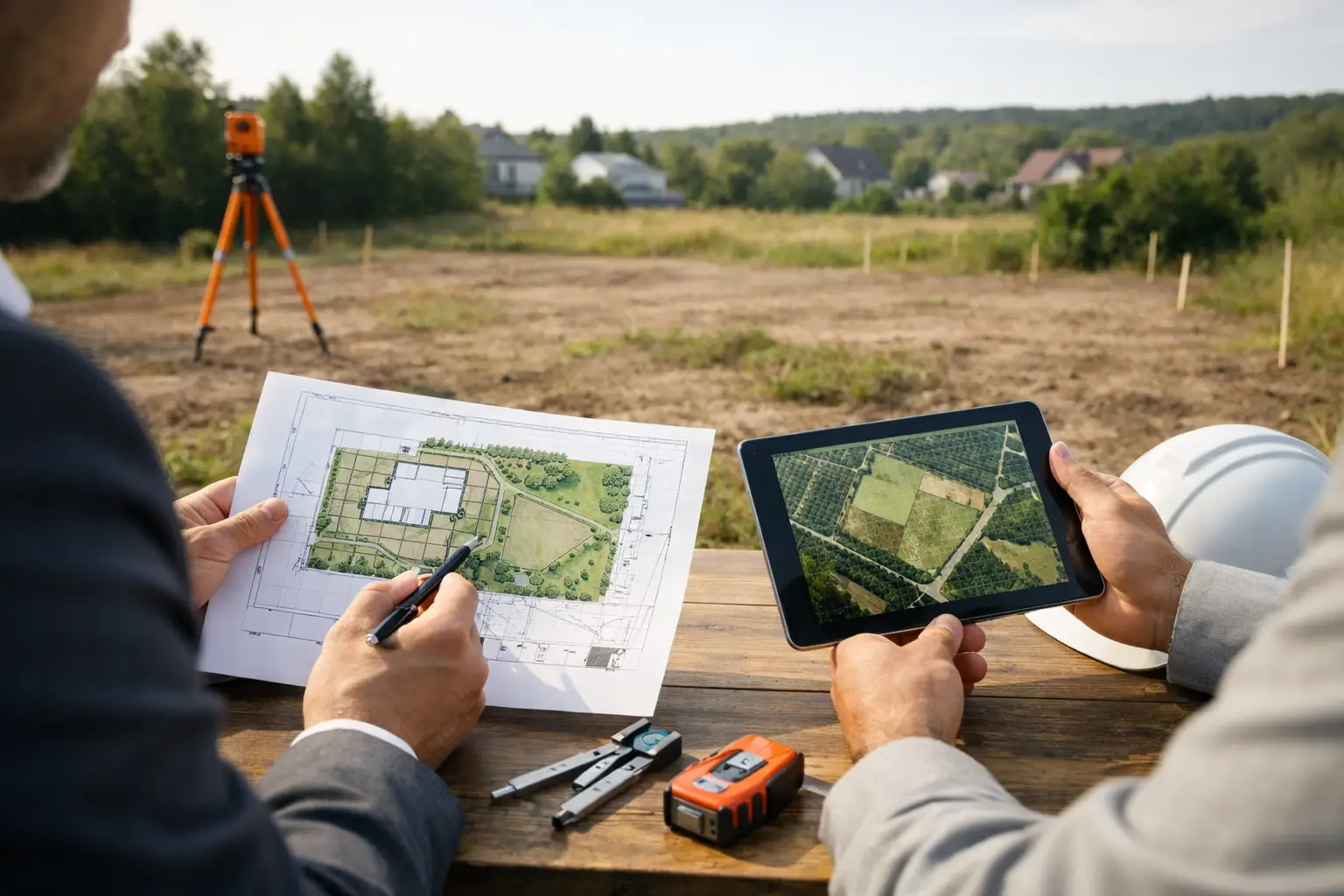
Buying land may look like a simple investment move – until, in which it turns out, that the plot has limited access to the road, unclear development conditions or expensive land problems. This is why an analysis of the plot for development should take place before the decision is made, not after her. The stage, that organizes the potential of a place, reveals risks and shows, whether the ambitious vision has a real legal basis, spatial and financial.
For the investor, developer whether the private owner is not just about answering the question, whether it can be built. This is equally important, what can be built, on what scale, at what cost and with what predictability of the process. A well-conducted analysis does not hinder the project. Contrary – allows you to enter it with precision.
What does the analysis of a plot for development really involve?
In practice, it is not one document or a single check. It's a set of decisions based on several layers of information. First, the legal status of the property is analyzed, then planning and technical conditions, and finally, they are compared with the business or functional assumption of the investment.
This is an important distinction, because the plot may be attractive in terms of location, and at the same time poor in terms of investment. It may also look inconspicuous, but if the planning parameters are properly read, they can provide above-average potential. This is where a perspective combining architecture with reality is needed investment process.
Legal status – the first filter of every decision
The starting point is the verification of the land and mortgage register, form of ownership and possible encumbrances. The mortgage itself doesn't have to be a problem, but easements, claims, co-ownership or unregulated legal status can significantly extend the process or limit the use of the property.
It is equally important to check the boundaries of the plot and the compliance of the registration data with reality. Errors in the boundaries, unclear access to a public road or differences between the map and the actual situation may have a real impact on the project. These are not administrative details. To parametry, which later translates into the building area, building layout and security of the entire transaction.
Local plan or development conditions
Planning provisions have the greatest impact on the profitability of an investment. If a local development plan applies to the area, it defines the basic framework of the project. Building function, building height, building lines, intensity, percentage of biologically active surface or roof geometry – each of these provisions may support the concept or significantly limit it.
If there is no plan, development conditions become crucial. You need to be more careful here, because the administrative procedure and the interpretation of the environment introduce less predictability. For some investors, this is still an acceptable operating model, especially when the location has strong potential. However, you have to make an honest assumption, that the lack of a plan usually means greater time risk and a less precise starting point for calculations.
What is worth reading from planning documents
It's not enough to check, whether the plot is suitable for construction purposes. This is too general. What matters is the permitted function, possible scale of investment and restrictions, that affect the effectiveness of the project. Two neighboring properties may have completely different development potential despite having a similar price and similar area.
For an investor, the relationship between the plan's provisions and the market scenario is also important. If the plan allows for development, but requires parameters, which increase the cost of implementation or reduce the usable area, the attractiveness of the land must be assessed more carefully.
Access to roads and technical infrastructure
A plot without proper access to a public road may stop the project at a very early stage. Physical access alone is not enough, if there is no appropriate legal title. This is one of those areas, which are often downplayed during the inspection, and then they come back as a serious formal problem.
The second pillar is the development of the area. Water, sewers, electricity, gaz, telecommunications networks – their availability affects not only the possibility of implementing the investment, but also on budget and schedule. Sometimes a plot of land looks attractively priced just for this reason, that the full provision of utilities requires additional services, high expenditure. In such a case, the apparent opportunity quickly ceases to be an opportunity.
Ground conditions and topography
A good location will not compensate for poor soil, if the foundation costs start to increase beyond the assumptions. Geotechnical analysis is not always performed at the very beginning, but when making a serious purchase decision, it is worth considering it as early as possible. Filled soils, high groundwater levels or unfavorable load-bearing conditions can significantly change the budget.
The geometry of the terrain itself is equally important. Plot decline, slopes, trees subject to protection, existing neighboring buildings or exposure to cardinal directions influence the design more, than is often assumed at the purchase stage. For an architect, this is a set of constraints, but also opportunities. For the investor – dane, which should be quickly translated into the costs and final value of the product.
The environment also projects value
The analysis of a plot for development does not end at the plot boundary. The urban context and neighborhood also matter. The nature of the buildings around, planned infrastructure investments, traffic intensity, noise, scenic exposure and access to services both influence the decision-making process, as well as the future attractiveness of the property.
For a private client, this means quality of everyday life. For the developer – product positioning and real sale or rental price. Even a well-designed building will not create full value, if the environment weakens its perception or limits its functionality.
The potential of the plot must be compared with the purpose of the investment
The same land can be great for an intimate house, average for a multi-family building and unprofitable for a service function. Therefore, the analysis should always be carried out in relation to a specific scenario. Without this, it is easy to confuse formal potential with business potential.
This stage is especially important synthetic look. It's not enough to know, that the plan allows for a certain height or that utilities are in the street. Still need to answer, Is it possible to design a facility of appropriate architectural quality with such parameters?, sensible functional arrangement and acceptable profitability. To moment, where design and investment experience start to work together.
The most common mistakes when assessing land
The most costly mistake is this, that the decision is made based on price and location, and the rest is to be explained later. Later usually means more expensive. Another problem is often the reading of planning documents too literally without checking them, how their provisions will translate into the actual layout of the building.
The second common mistake is skipping the time. Plot with potential, but a complicated formal path, can only be a good choice then, when the investor's schedule allows it. If the project is to start quickly, lengthy arrangements or administrative uncertainty should be assessed at the outset.
The third mistake is the lack of coordination between architectural and financial analysis. This is especially important in larger-scale projects. The sooner you compare the development parameters with the costs, project standard and expected investment result, the lower the risk of decisions based on overly optimistic assumptions.
When a plot analysis is really sufficient
Good analysis makes no promises, that the project will be completely free from changes. It gives something more valuable – an informed basis for decisions. You know then, which elements are certain, that require further arrangements, and which pose a real risk. This allows you to talk to the designer, investor and financial partners in a specific way, no guesswork.
In practice, the best effect is achieved by a multi-discipline approach. Legal aspect, urban planning, design and economic should be read together, because only then can you see the full picture of the property. That's why at QCA we treat land not as an empty space for development, but as the beginning of a process, in which form, function and value must be consistent with each other.
Not every plot of land should be purchased just for this reason, that you can build on it. Sometimes the better decision is to give up, and sometimes a bold entry into the field, which at first glance seems more difficult, but it actually offers more potential. Good analysis organizes these choices and allows you to invest with greater awareness. This is where the project begins, which makes sense – not only on paper, but also in implementation.