

Guide to preparing a housing investment
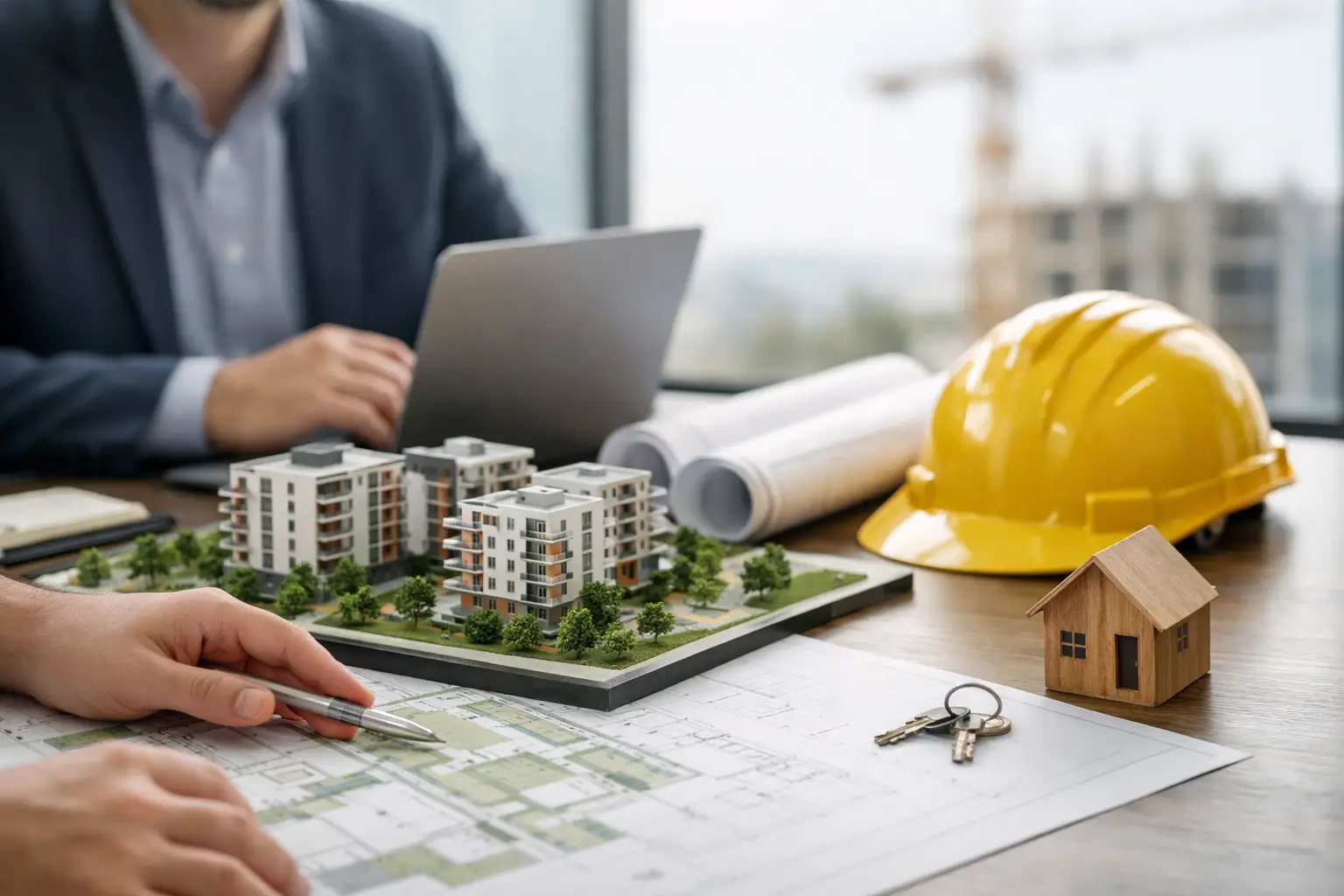
The first decisions in a residential investment are made long before the shovel is broken. This is when the decision is made, whether the project will have a chance of successful implementation, good sales or stable return. This guide to preparing a housing investment organizes the most important stages, which determine not only the aesthetics of the building, but above all about its feasibility, value and pace of market entry.
From idea to investment model
A good residential investment does not start with the facade or visualization. It starts with a question, what product is to be created and for whom. An intimate building in the city center is being prepared differently, otherwise known as a housing complex on the outskirts of the city, and yet another premium design, in which architecture is to be one of the main sales arguments.
At this stage, three perspectives need to be combined: market, finance and space. Location absorption analysis, demand structures, expected square footage and finishing standard should go in parallel with the preliminary area balance and investment cost estimate. Without this, it is easy to create an attractive concept on paper, but too expensive to implement or not suited to the local client.
The investment model should answer several basic issues: what is the expected scale of the project, what standard it should represent, what level of margin is realistic and where the main risks lie. The sooner these assumptions are named, the fewer costly corrections will occur later.
Plot analysis, which is ahead of the project
In practice, it is not the building that defines the potential of an investment, but the plot and its limitations. This is why real estate analysis should be much broader than checking the ground surface or access to the road. What matters is the local plan or development conditions, urban parameters, possible intensity of development, building lines, height, roof geometry, biologically active indicators, access to media and environmental conditions.
Less obvious issues are equally important: neighborhood, exposure, noise, shading, terrain or potential infrastructure collisions. Plot, which apparently looks attractive, may require expensive network reconstruction, complicated communication services or non-standard design solutions. In turn, the ground is more difficult, well analyzed at the start, can be a source of competitive advantage, if it allows you to create a product that is better suited to the place.
This is where the value of integrated thinking about investment becomes apparent. When spatial decisions are made simultaneously with profitability assessment, you can more quickly distinguish potential from apparent opportunity.
Guide to preparing a housing investment – formal stage
Formalities are not an addition to the process. They are its structural axis. The sooner they are sorted out, the greater your chance of staying on schedule and controlling your budget.
The basis is verification of the legal status of the property, planning provisions and restrictions resulting from special regulations. Need to be determined, whether there is a local development plan for the plot, whether it will be necessary to obtain a decision on development conditions, and whether the investment requires additional industry or environmental arrangements.
At this stage, many investors make the same mistake: treats procedures as a linear sequence of events. Meanwhile, preparing a housing investment requires pursuing several paths in parallel. Concept development, conversations with network operators, communication analysis, soil testing and preparation of documentation for a building permit should overlap. This shortens the process, but requires a functional one running the project and good coordination between specialists.
The quickest way is not always the best. Sometimes it is worth spending more time refining your assumptions before submitting an application, if this reduces the risk of subsequent design changes. Especially in housing investments, any correction after entering the formal stage can translate into real costs.
Architectural design as a tool of values
In the housing market, architecture has a double role. It must build the identity of the project, but at the same time work for the financial result. A well-prepared project does not rely on maximum use of the plot's parameters at any cost. It involves finding the right proportion between surface efficiency, comfort of use and quality of space.
This applies to apartment layouts, communication departments, additional lighting, relations with the environment, privacy and common areas. Apartment, which perform well in the surface sheet, they don't always work well in everyday use. In turn, the attractive form of the building, if it ignores the economics of implementation, may weaken the entire investment model.
The best housing projects are created there, where design does not compete with investment logic, but it strengthens it. Noble simplicity, a clear functional layout and properly selected materials often give a better effect than formal overexpression. In the premium segment, the importance of architecture is obviously growing, but even there, aesthetic decisions must have practical and business justification.
Costs, schedule and margin of safety
An investment budget should not be a wishful document. It should be a decision-making tool. It includes more than just the cost of construction, but also the purchase of land, project, arrangements, connections, legal services, financing, marketing, sales and reserves for unforeseen events.
The greatest risk occurs then, when an investor assumes an overly optimistic scenario on several levels at the same time: deadlines, implementation costs and sales prices. Each of these assumptions can be defended separately, but together they create a model that is too fragile for the realities of the market. It is wiser to accept several variants and check, how the project behaves when key parameters change.
Scheduling also requires discipline. It's not just about the construction start date, but about the entire sequence of actions – from due diligence of the plot, by design and permit, after the tender, execution and commercialization. A delay in the preparation stage often comes back with double force later, because it affects financing and the sales window.
Project team and cooperation model
One of the most often underestimated elements of investment preparation is the way of organizing cooperation. Even very good soil and a promising product can lose momentum, if architect, constructor, industry professionals, the cost estimator and consultants operate in isolation from a common goal.
The model works particularly well in residential projects, in which design decisions are constantly confronted with implementation and investment realities. This limits the phenomenon of shifting problems between stages. If the concept is created from the beginning with procedures in mind, costs and final standard of implementation, the design becomes more predictable.
For many investors, this is the advantage of working with a partner, who understands both the language of architecture, as well as development logic. In practice, this means less friction, faster decisions and greater consistency between vision and result. QCA works at the intersection of these competences, combining design with investment thinking.
A guide to preparing a residential investment and final sale
It's worth remembering, that the preparation of a housing investment does not end with a building permit. You need to know already at the concept stage, how the project will be positioned and communicated. Architecture, standard of common areas, apartment layout, the number of parking spaces and the way greenery is developed influence this, how the market will read the investment.
It's especially important there, where the competition is strong, and customers compare projects not only by price, but also the quality of the experience. This is not why a well-designed investment sells, that it has more marketing slogans, but because, that from the very beginning it was conceived as a coherent product. In such a project, the price is easier to defend, build a differentiator and avoid nervous changes under market pressure.
This does not always mean raising the standard. Sometimes greater value comes from precisely tailoring a product to the expectations of a specific group of buyers. An investment for young professionals will have different priorities than an intimate building targeted at clients looking for larger family apartments or investment apartments..
What really determines the success of an investment
The strongest housing projects are usually the result of discipline, no improvisation. Their strength does not come from one spectacular idea, but from the quality of the decisions made successively – from the choice of plot, through the financial model and formal strategy, to architecture and the method of implementation.
Therefore, it is worth treating the preparation of a housing investment not as a series of obligations to be checked off, but as a process of building an advantage. Each stage influences the next one, and any lack of specificity comes back later as a cost, delay or quality compromise. A well-prepared project gives more than just a smooth start of construction – gives the investor a feeling, that vision and outcome have a common foundation.