
7 ways to increase the value of real estate
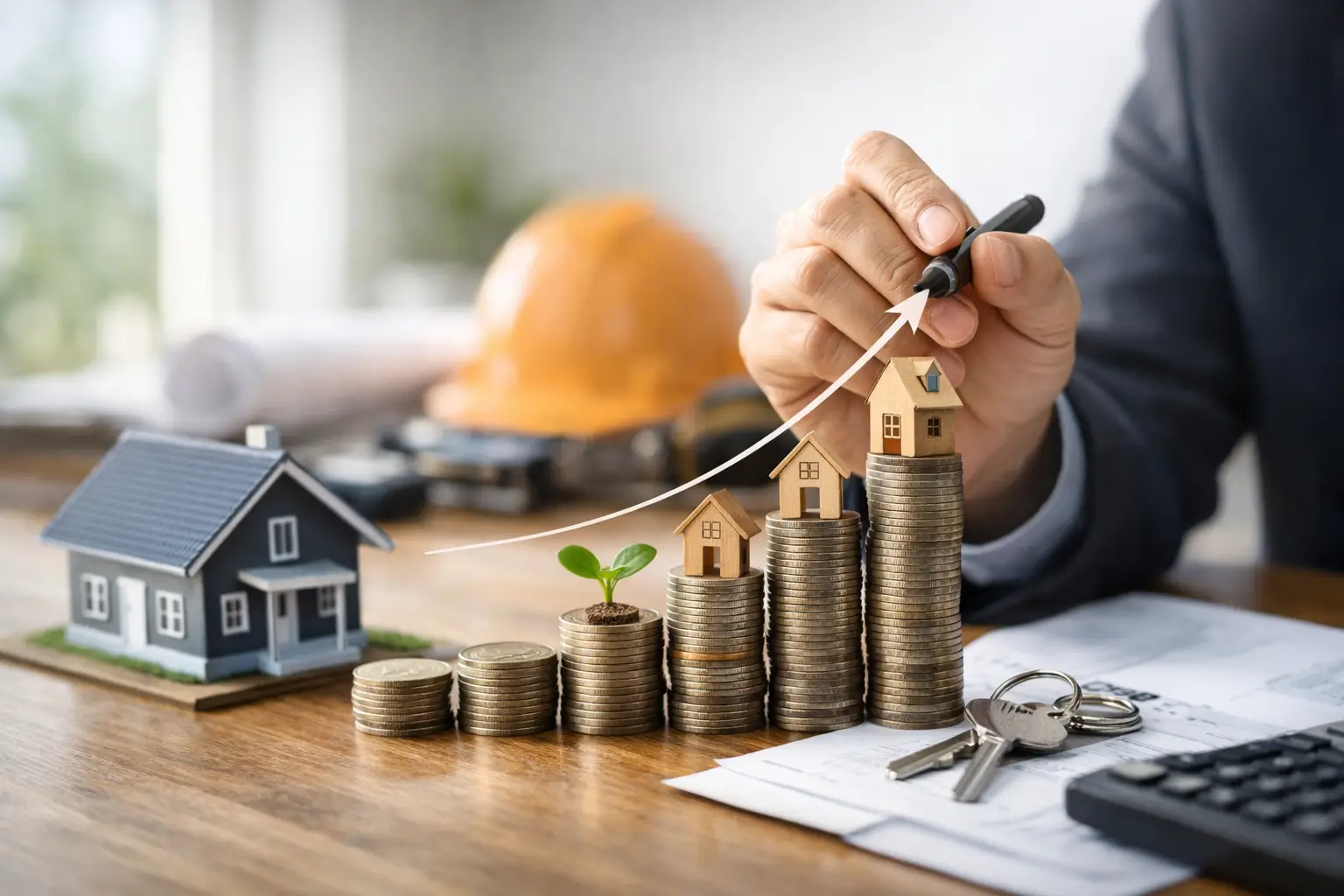
The buyer often makes a decision in just a few minutes. The investor calculates the rate of return, but he also quickly assesses the quality of the space, the logic of the system and the potential for further development. That's why 7 ways to increase the value of real estate should be understood not as a list of cosmetic treatments, but as a set of design and investment decisions, that actually change the perception of the asset on the market.
In practice, the value of the property then increases, when architecture, interior and design economics work together. A high budget alone does not guarantee a better result. This is much more important, whether the space meets the actual needs of users, whether the building is visually coherent and whether each amount spent strengthens the position of the property when sold, leasing or refinancing.
7 ways to increase the value of real estate, that work
1. Start with the functional layout, not for decoration
The most underestimated source of value increase is a well-thought-out space plan. Even an attractive location will not protect the apartment or premises, if the arrangement is illogical, communication too extensive, and the square footage was misused. The market rewards intuitive spaces, flexible and comfortable in everyday use.
In apartments, this usually means better lighting of the living area, reducing unnecessary corridors, more storage and sensible room proportions. In commercial real estate Additionally, it is easy to adapt to various rental models. A good layout not only improves comfort. It also shortens the offer exposure time and limits the scope for price negotiations.
It's an area, where design decisions have an extremely high return. Sometimes moving one wall gives more than the costly replacement of all finishing materials.
2. Raise the standard of finishing, but with discipline
Finishing only adds value, when it is consistent with the property class, recipient's location and profile. Too low a standard reduces the perceived quality of the whole. Too high, not suited to the market, may not translate into the final price.
Durable materials work best, timeless and aesthetically restrained. Stone, natural wood, good lighting, Higher quality joinery and carefully designed details create an impression of value without excessive ostentation. Buyers and tenants are increasingly better able to distinguish real quality from a superficial premium effect.
It's also worth remembering, that the standard is not only that, what you can see in the photos. Equality of execution, quality of structures, acoustics, the durability of the fittings and the way the bathroom is finished have a much stronger impact on the perception, than the cost estimate itself suggests.
3. Take care of consistent architecture and first impression
The value of a property begins before you step inside. Elevation, entrance area, common parts, the building's surroundings and the way the user is guided through the space create the first message about the quality of the investment. If it's chaotic, later advantages lose their strength.
In the case of a house, the composition of the body is important, relationship with the garden and the readability of the entrance. Lobbies are equally important in multi-family buildings and commercial facilities, staircases, signage and lighting. Aesthetics is not an addition here. To element, which influences the perception of the place's brand and builds trust in the entire asset.
Well-designed architecture also improves the property's resistance to the passage of time. Pure objects, consistent form, they age visually slower and remain attractive on the market longer.
4. Introduce energy-saving solutions and comfort of use
Rising operating costs have caused, that energy efficiency is no longer a marketing add-on. Today it directly influences purchasing and renting decisions. Property, which generates lower maintenance costs, it's just more competitive.
The scope of possible activities depends on the type of building and the scale of the investment. Sometimes it will be the modernization of joinery, insulation and heating systems. Another time, intelligent control of installations, improved ventilation or better designed shading. It's not just about reducing your bills, but also thermal comfort, air quality and acoustics.
This is one of those areas, where it is worth thinking long-term. Not every modernization will pay off equally quickly, but many of them strengthen the attractiveness of the property on the market and secure its position in relation to future standards and expectations of buyers.
5. Increase function flexibility
Properties with greater flexibility tend to retain their value better. The market is changing faster than before. Work patterns are changing, lifestyles, tenants' expectations and household structure. Space, that can be easily customized, has a wider audience.
In apartments, this may mean the possibility of separating an office, an additional bedroom or a larger storage area. In service and office premises – arrangement enabling various rental scenarios, division or adaptation. Flexibility reduces the risk of vacancy and increases the owner's negotiation potential.
It doesn't always require a major rebuild. Sometimes it is enough to provide appropriate installation points, modular wall system or development, that organizes the function without foreclosing future possibilities.
Which actually increases the value of real estate
6. Use the potential of outdoor surfaces
Taras, balcony, garden, a patio or a utility roof can significantly increase the attractiveness of the property, but only then, when they are treated as a full-fledged part of the project. The mere presence of outdoor space is not enough. What matters is its proportion, privacy, exposure to light, finishing and relationship with the interior.
In the residential segment, a well-designed outdoor space increases the sense of comfort and improves the everyday quality of life. In commercial facilities can create additional utility value, support the tenant's brand image or expand the function of the premises.
In Polish conditions, simple solutions work particularly well, durable and resistant to seasonality. It's not about the catalog effect, but for space, which really encourages use.
7. Think like an investor – design from a market perspective
Last of 7 ways to increase in property value it is also the most important, because it connects all the others. The increase in value is not solely due to this, how much money was invested, but from this, whether the project responds to market logic. Every decision should be evaluated through two filters: whether it improves the quality of space and whether it strengthens the position of the property as a product.
This means analyzing the target group, local price level, competition standard and possible exit scenarios. A premium apartment in a big city is designed differently, otherwise a house for a family near the agglomeration, or, in other words, a service premises with a stable lease in mind. The same material or solution can add value in one project, and in others it may be an unnecessary expense.
Therefore, the best results are achieved by an integrated approach, in which architecture, interiors and execution are subordinated to a clearly defined business goal. In practice, this perspective allows you to limit random decisions and focus the budget there, where it creates a real advantage. QCA works exactly at this point of contact – between the quality of the project and the profitability of the entire project.
When renovation does not increase value
Property owners often assume, that every renovation is a plus. This is one of the most common mistakes. If the scope of work is not suited to the location, the standard of the building or the recipient's expectations, the result may be neutral or even unfavorable.
Excessively individual solutions narrow the group of interested parties. Ripe, but perishable materials lose their freshness quickly. In turn, investing only in the visual layer, without improving the system, installation or quality of workmanship, gives a short-term effect. The market is becoming more and more demanding and the apparent standard is being adopted more and more quickly.
It makes most sense to treat the increase in value as a selection process, not the sum of expenses. Good designs don't try to do everything at once. They select a few areas with the greatest impact and pursue them with consistency.
Value is created in decisions, not in declarations
The property then benefits, when each element – from layout to finishing detail – supports one coherent goal. It's not about that, to do more. The point is this, to design smarter, with market sensitivity and respect for the quality of space. This is where value is created, which is visible not only in aesthetics, but also as a result of investment.